Top Ten Manic Street Preachers Songs
In response to the overwhelming demand, I’ve finally made a list of my top ten Manic Street Preachers songs. Now I need to find somewhere to lie down for a while.
Manic Street Preachers lit a fire under me as a teenager that’s still burning to this day. They convinced me that art was the only game in town and every other pursuit was a shallow waste of time. In hindsight, I’m not sure whether I should thank them for that or not.
So, yeah, there’s certainly an element of the first cut being the deepest going on for me here. It also helps that they never really went away, and have remained a constant throughout my life. Of course, not every album they’ve made is great, indeed many are terrible, but they keep pushing forward and I still feel they’ve got one more masterpiece in them.
Whatever happens, they will always be the band I root for the most. So, without further ado, here are my top ten favourite Manic Street Preachers songs.
10. Misguided Missile - Futurology - 2014
Futurology might be the highlight of my Manics fandom. It came at such a perfect time and had loads of songs I felt I could share with people again. Misguided Missile starts with an ominous bassline joined shortly afterwards by driving beat and a verse vocal that sees James deliver a vocal that’s both bitter and full of intent. Nicky Wire, always at his best when he tries to write with meter, delivers a late-day-masterpiece here with lines like: “society never made an effort with me/I was willing to be deceived”. Both hilarious and poignant, there aren’t many songwriters that bask so comfortably in self-pity to the same degree as Nicky Wire. This song further builds his case to being alternative music’s unofficial anti-Buddha.
9. Wattsville Blues - Know Your Enemy - 2001
Nicky’s first full-length vocal delivered as if he expected it to be his last. A song inspired by being doxed by the tabloid press, this is a Manics at their most caustic and musically confrontational. During the first verse, it seems discordant and tuneless, a protest against the very notion of music itself. But then James Dean Bradfield joins the chorus with an exquisitely soulful vocal and funk-inspired bassline. Once you know what’s coming, the tunelessness of Nicky’s verse only serves to heighten the eventual release that James provides. A celebration of bitterness, reclusive-living, and small town mundanity, Wattsville Blues stands out for its weirdness but still delivers their signature brand of melancholy laced with rage.
8. Kevin Carter - Everything MUST Go - 1996
I’ve never been an Everything Must Go fanatic. When I was getting into the Manics, I overlooked it and its follow-up largely because I knew so much of its contents from listening to Forever Delayed. I still wouldn’t rank it in my top 5 albums, as crazy as that may seem to some fans. However, whenever I’ve come across discussions of this album, I’ve always been shocked at how underappreciated this song is. Moore’s cheeky bossanova drumming contrasts Bradfield’s stabbing guitars, making this song catchy, and, dare I say, danceable. Then there’s the matter of the lyrics. On the surface, it’s a rather blunt retelling of the tragic story of war photographer Kevin Carter, famous for his picture of a vulture stalking a malnourished child during the Ethiopian famine. Cold, staccato punchlines with little apparent empathy, it almost seems in bad taste until you delve a little deeper. Given his own struggles with mental health, it’s likely Richey was using the story of Kevin Carter to reflect upon his own role as an artist and a powerless observer to the horrors unfolding in the world, bringing into question the merits of art itself. What a brilliant thing to write a pop song about. Oh, and as if any of this wasn’t enough, the climax of the song is a jazz trumpet solo performed by Sean Moore.
7. Judge Yrself - Lipstick Traces - 2003
It’s clear that the Manics struggled more than most bands to figure out their identity in the early albums, and this led to some strange and interesting experiments. Generation Terrorists was a poorly produced posturing homage to Appetite for Destruction, while Gold Against the Soul was an improvement musically, it saw the band shed its punk aesthetic in favour of a cleaner, more radio-friendly sound. All roads lead to The Holy Bible and Judge Yrself paves the way for what their most important album will ultimately become. Lyrically oblique, yet musically rigid, it acts as a precursor to Faster in its militaristic celebration of ascetic nihilism. Recorded for the Judge Dread film soundtrack but never actually included in it, that a song of this quality was literally scrapped after recording, and never even released baffles me to this day.
6. Cardiff Afterlife - Lifeblood - 2004
Lifeblood was the first Manics album that I bought upon its release, and its closing track always takes my breath away. Arguably the first direct reference to Richey in a Manics’ song, Cardiff Afterlife inspires a rather unusual series of adjectives: breezy, dramatic, wistful, and resentful. The song sees James channel his folk influences as his voice lilts gracefully over harmonica and acoustic guitar, culminating in an oddly taut and rigid chorus, making it one of the band’s more unusually-structured songs. The song opens with the heartbreaking: “if the love between us has faded away”, which suggests it isn’t just about the pain of loss, but also the loss of pain. Moving on from the disappearance of their friend must have been equally painful as losing him in the first place. The afterlife in question is the one down here in the real world, where the future is “paralyzed” and the past “sideways crawls”.
5. Facing Page Top Left - Journal for Plague Lovers - 2009
What a time to be alive and another reason why the Manics’ 00s output was just as interesting as what they did in the 90s. Riding high after the success of Send Away the Tigers, an album that sold well but disappointed hardcore fans, the Manics thankfully made an about turn in deciding to tackle the mythical Ryman’s folder that Richey had given to the band shortly before his disappearance. Facing Page Top Left acts as the mellow centrepiece of the album, similar to Small Black Flowers that Grow in the Sky or This Is Yesterday, and hints at the process of dissociation a patient may go through while heavily medicated. James nails the lyrics' child-like sense of awakening in the verses, and somehow transforms Richey’s attempts to push the boundaries of syntax into a comforting, melancholic melody. The lines “private care and sugar pills/the flak of healing/fragrance my escort of no meaning” are starkly beautiful, but also ambiguous, and perhaps that’s the power of this song; you never feel like you’ve fully got to grips with it but keep going back for more. There’s something there in the words, an epiphany just out of reach.
4. Hold Me Like a Heaven - Resistance is Futile - 2018
Nicky’s writing is at its weakest when he wants to make a point, and it’s at its strongest when he tries to write like a poet. Inspired by Philip Larkin’s Lines from a Young Lady’s Photograph Album, it’s a heartbreaking portrait of Nicky’s state of mind written, presumably, around the time his mother was gravely ill. “I dance around the exit signs” is heartbreakingly beautiful, making the song both intensely sad but also comforting. Musically, it flies in the face of everything I want from the Manics. It’s simplistic, repetitive, and as others have pointed out, sounds like something Coldplay would write. And yet somehow it works, probably because the strength of the lyric elevates it beyond a mawkish stadium singalong.
3. Door to the River - Door to the River - 2001/2021?
Let’s indulge the band’s revisionist tendencies for a moment and go with the alternative version of the song, which was not the original version of the song released but was intended to have been so originally. (What a horrible sentence!) Confusion aside, this song sees Nicky write a lyric vague enough to be universal. On paper it may not jump off of the page, but James’ vocal melody transforms it into an epic expression of hope, sadness, and longing. “But it’s true the things we feel don’t go/The people you love (will) hold on.” Ostensibly a song about the melancholy evoked by Nicky’s viewing of a William de Kooning painting, perhaps the star of the show in this version is Sean’s incredible drumming, which is the emotional motor of the song.
2. Born a Girl - This Is My Truth Tell Me Yours - 1994
https://www.youtube.com/watch?v=N92CJGLrIVk&pp=ygULQk9STiBBIEdJUkw%3D
Fitting it is, perhaps, that my number 2 and 1 are both solo efforts by the Manics’ two primary lyricists. Born a Girl is the Manic Street Preachers most vulnerable song. Haunting is not a word often used to describe Manics tracks, but here it fits. A deeply personal song that we can only assume relates to struggles Nicky has had with his gender identity, to me it’s always been about the deep-seated desire to drop all manly baggage, be free of the guilt and shame and bodily disgust, and live in the gentle and liberating space that I may misguidedly imagine to exist within the realm of the feminine. It frustrates me that the Manics often get lumped in with the rest of the laddish rock of the period, when at the height of their fame they were clearly pushing boundaries. OK Computer may have taken rock music in a bold new direction, and subsequently burst the Britpop bubble, yet none of the lyrics on that album are anything near as vulnerable and revealing as Born a Girl. Although musically it’s not a match for Radiohead’s Magnum Opus, I believe This Is My Truth, Tell Me Yours also helped to pull the rug out from under the patriotic pageantry of the era, and reveal a not so rosy state of the nation.
1. 4st 7lbs - The Holy Bible- 1994
I cannot stress enough the impact this song has had on my life. Hearing it for the first time, or rather reading it, goes way beyond formative. I didn’t know music could reach this far into the reality of suffering. To be so bleak and painful but yet so beautiful, this song is about so much more than a person with an eating disorder. It explores the power of art to approach the ineffable, transform pain into beauty, and to tell the truth where before it seemed impossible. As far as lyrics and music go, this is their Magnum Opus, exhibits the best of what the band are capable of both on the page and musically. James and Sean take their source material and create a gritty post punk opera that gradually fades into an “epilogue of youth”. I used to think that every word that Richey Edwards consigned to paper was immutable genius, but not anymore. He is not infallible by any means. But let’s face it: this level of lyricism is rare in music. That they were writing about themes like this in time when the prevailing cultural movements of the day were Madchester and Britpop is all the more impressive, and may serve as a welcome antidote for anyone looking to avoid the vapid sing-along-to-the-90s nostalgia campaign mainstream media is currently subjecting us to.
Shout out to Keith Cameron’s 168 Songs of Hatred and Failure, the Manic Street Preachers song-by-song blog, and the What Is Music podcast for greatly enhancing the experience of being a Manics Fan.
A Sabbatical in Leipzig by Adrian Duncan | Review
A review of Adrian Duncan's second novel, A Sabbatical in Leipzig.
In wrestling, the success of a performer often relies on the originality and authenticity of their gimmick, the character trait that defines their persona and sets them apart. While reading A Sabbatical in Leipzig by Adrian Duncan, I began to think of writers as having gimmicks too.
What’s clear from having also read his debut novel, Notes from a German Building Site, is that Duncan’s background in engineering serves as an engaging prism through which he projects his stories. Similarly, Sabbatical takes this gimmick further, resulting in one of the most bizarre, bewildering, and beautiful novels I’ve come across for quite some time.
It tells the story of Michael, a retired architect who spent his career building bridges all around the world. Having grown up on the boglands of Longford during the electrification era, Michael witnesses his nation’s first clumsy steps towards modernisation. Perhaps this is what leads him to dedicate his life to building bridges, connecting landscapes both remote and civilised.
Midway through his career, he falls for Catherine, a museum curator who helps him recover from a workplace trauma and continue his work from the relative calm of Stasi-era Leipzig, and later Bilbao.
When Catherine passes, however, Michael withdraws from life as an active pursuit, retreating into the spatial comforts of light and structure and an obsession with Richard Serra’s labyrinthine sculptures exhibited at the Guggenheim Museum.
“The joy of this novel lies in spending time with someone who experiences architecture with the same depth of emotion that an ordinary person might experience music. ”
The joy of this novel lies in spending time with someone who experiences architecture with the same depth of emotion that an ordinary person might experience music. As in most great novels, very little happens. Instead, we are swept along on a wave of loss, loneliness, and slow dissociation. Works of such ambition or obliqueness are usually difficult to read, yet A Sabbatical in Leipzig flows like a page-turner.
Which brings me back to my original point. It is often said that the greatest gimmicks in wrestling aren’t gimmicks at all but are built around the wrestler’s own personality. Duncan is intimately familiar with a world most writers know nothing about, and, as such, his work takes on a rare quality in contemporary literature: originality.
About Adrian Duncan
Adrian Duncan’s debut novel, Love Notes from a German Building Site, won the 2019 John McGahern Book Prize. His second novel, A Sabbatical in Leipzig, was shortlisted for the Kerry Group Irish Novel of the Year Award 2020. His collection of short stories, Midfield Dynamo, was published in March 2021 and was longlisted for the Edge Hill Prize, while his third novel, The Geometer Lobachevsky, published in April 2022, was shortlisted for the Walter Scott Prize and the Kerry Group Irish Novel of the Year. His latest novel, The Gorgeous Inertia of the Earth, was published to critical acclaim in January of 2025.
Interview with Charlie McGettigan on Shannonside Radio
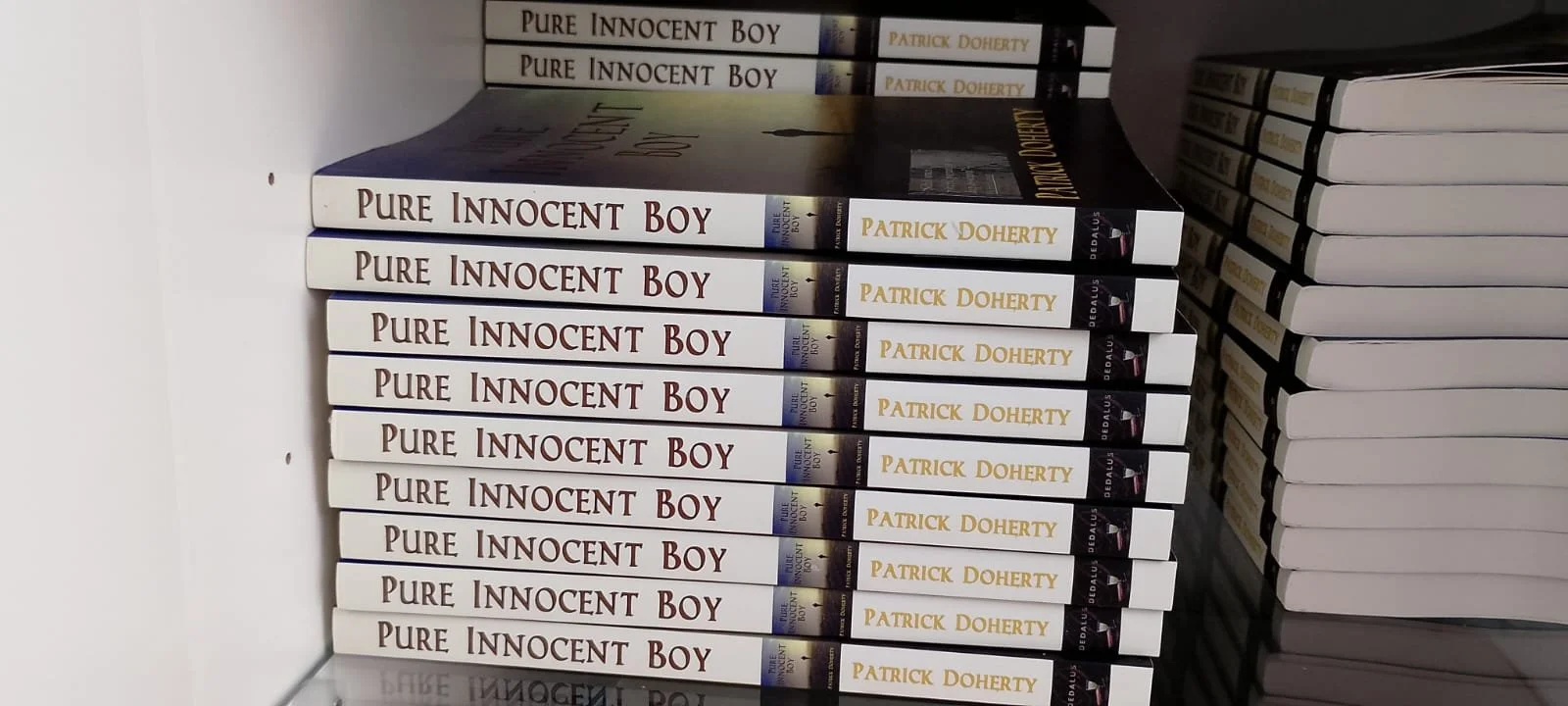
I was delighted to be invited on to Shannonside Radio’s Saturday Connection programme, hosted by one of Ireland’s great songwriters, Charlie McGettigan. Charlie and his producer Alena were very kind and welcoming and I had a wonderful time. If you’re in the Midlands area, I highly recommend that you tune into Charlie’s show evey on Saturday from 10-11 am. You can listen to my conversation with Charlie here:
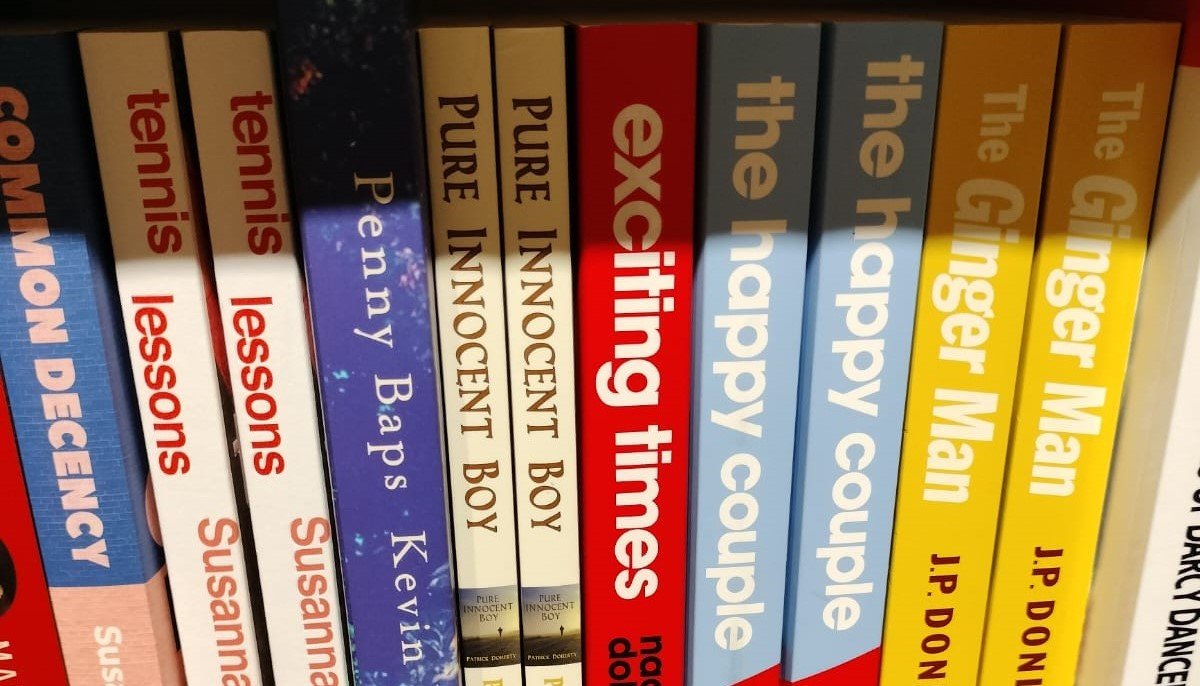
Bookshops in Ireland with Pure Innocent Boy in Stock
Here’s a list of bookshops in Ireland that currently have Pure Innocent Boy in stock.
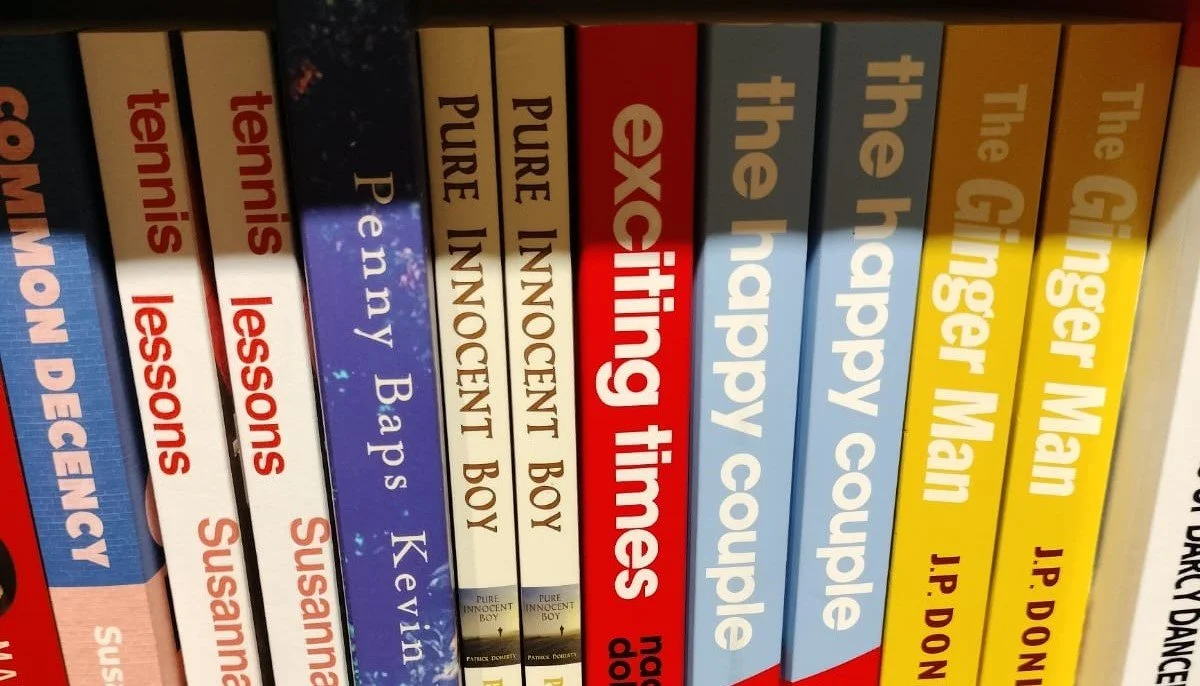
For anyone wondering where they can buy my debut novel, the following bookshops are currently stocking it:
Charlie Byrne's Galway
Hodges Figgis, Dublin
O'Mahony's Limerick
O’Mahony’s Tralee
Leaf & Bower, Ballincolig, Cork
Newsround, Longford
Newsround Roscommon
Just Books, Mullingar
The Reading Room, Carrick-On-Shannon
Kenny's, Galway
Liber Books, Sligo
It can also be ordered from any bookshop in Ireland and the UK. If you own a bookshop and have Pure Innocent Boy in stock, please let me know and I’ll add your bookshop to the list.
Pure Innocent Boy Featured as Part of RTE Culture Night
Guest editor and award-winning novelist, Belinda McKeon, has included Pure Innocent Boy among the works featured in this year’s RTE Culture Night. You can read an extract from the novel here.
An annual celebration of arts and creativity, RTE Culture Night also featured poetry by Rafael Mendes and Róisín Leggett Bohan.
Pure Innocent Boy Launch Events October 2025

Very excited to be launching my debut novel in Hodges Figgis on October 8th, 2025, at 6 p.m. We’ll also be doing a hometown launch in Longford on October 7th at the Longford County Library. Finally, we’ll be finishing up our mini book tour in Leaf & Bower, Ballincollig, Co, Cork on the 9th.